

Stocks to watch: BHEL, L&T, IRB Infra and Suzlon

The Bharatiya Janata Party regime will have to make good on this election slogan to restore state-owned banks to health, says Rajiv Lall.

Stocks of public sector undertakings (PSUs) have been on fire in the past year as investors cheered an improvement in key operating metrics and embraced counters of these state-owned enterprises, analysts suggest. The S&P BSE PSU Index has gained over 90 per cent in the past year, rising much higher than the S&P BSE Sensex, which has rose nearly 19 per cent during this period, according to ACE Equity data. The BSE PSU Index, reports show, has delivered a compound annual growth rate (CAGR) of 28 per cent (including dividends reinvestments) over five years and risen by almost 60 per cent in the past year.

Assume the worst regarding how long your unemployment could last and make conserving cash your topmost priority, suggests Sanjay Kumar Singh.

'We get to know secrets such as some of India's top-rated firms do not always make payments when due and many State-owned, listed, enterprises that borrow in bond markets default regularly.' 'Without naming the bank, he says that ever-greening of poor loans by a part of India's shadow banking lay at the doorstep of India's banking, notably 'one private bank'.' Viral Acharya's Quest for Restoring Financial Stability in India won't be music to many ears, observes Tamal Bandyopadhyay.

'Sell part of your portfolio where you're making good money, especially in small caps and mid caps.' 'The money which you take home is yours. The money which is there on paper is not yours.

The bosses of SBI, Union Bank and Central Bank have been driving down to their offices everyday to take stock of the biggest loan drive ever undertaken for MSMEs, discovers Tamal Bandyopadhyay.

Even if Mudra steps in to play its main role of refinancing at some stage, the responsibility for the bad loans remains with the banks.

'To the believers of crypto regulations, I have only one question to ask, how will you regulate it?'

'We are very watchful about inflation and growth. But the main challenge is economic revival and growth.'

'The estimates of tax forgone on this item run into hundreds of billions.' 'And there is neither fairness nor rationality to support continuing with this tax holiday for just one class of investors, those who put their money in shares,' says T N Ninan.

The lock-in would be for a period of six months.

Hectic fundraising through initial public offerings (IPOs) is expected in October-November, with at least 30 companies are looking to collectively raise over Rs 45,000 crore through initial share-sales, merchant banking sources said. Of the total fundraising, a large chunk would be garnered by technology-driven companies. The successful IPO of food delivery company Zomato, which was overwhelmingly subscribed by over 38 times, encouraged new-age tech companies to come out with their primary share-sales.
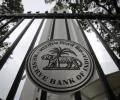
RBI may also be open to injecting liquidity through open market purchases of bonds but is resisting relaxing capital buffers for banks.

Keen to capitalise on the growing geopolitical support from African nations after the recently concluded G20 Summit, India is working with the African Union to hold the fourth India-Africa Forum Summit later this year in Kenya's Nairobi, sources said. Prime Minister Narendra Modi is expected to attend the mega meet along with as many as 50 African leaders, they added. First held in New Delhi in 2008, the India-Africa Forum Summit marked India's initial diplomatic efforts to seek a comprehensive partnership with the African bloc of nations as a whole, at a time when China had begun its own outreach.

'Returns can be very variable in equity markets.' 'That is why I tell small investors don't put 100 per cent of your money in equities, even if you are young.'

Meet to review progress on lending, impact of recent rate cuts and what is being done on NPAs, among other things

'There are some high-frequency indicators where uptick is visible and some where it is not'

If banks cannot charge interest from borrowers during the moratorium, who will bear that cost? Should the depositors subsidise the borrowers by foregoing interest on deposits? In that case, we will turn banking on its head! notes Tamal Bandyopadhyay.

India's economy is projected to slow to 6.5 per cent in the fiscal year starting April but will remain the fastest growing major economy in the world as it fared better in dealing with the extraordinary set of challenges the globe has faced, the Economic Survey 2022-23 said on Tuesday. India's gross domestic product (GDP) growth of 6.5 per cent in 2023-24 compares with an estimated 7 per cent expansion in current fiscal year (April 2022 to March 2023) and 8.7 per cent in the previous year. Like the rest of the world, India too faced an extraordinary set of challenges in tightening financial conditions and supply chain disruptions from a prolonged war in Europe but "withstood them better than most economies", the annual document detailing the state of the economy said.

Anticipating panic and rush at bank counters, the Reserve Bank of India as well as the government has set up control rooms in Mumbai and the national capital to avoid any crisis, Department of Economic Affairs Secretary Shaktikanta Das said.

'Given that debt AIFs, by nature, target a higher portfolio return, it is likely to attract investors like HNIs, family offices, etc, looking for a higher yield debt product.'

'By not letting bankrupt banks fail, we have discouraged ordinary folk from taking precautions while choosing their bank or at least when they hear bad news about their bank,'says S Muralidharan, former MD, BNP Paribas.

'Credit expansion is probably the quickest way to get the economy going again.' 'Easy credit is like a shot of nitro in a race car: In timely, small, quick, doses it can give a tremendous boost but carried to extreme it can destroy the engine,' points out S Muralidharan, former managing director, BNP Paribas.

Axis Bank emerged as the biggest gainer in the Sensex pack, surging 6.62 per cent, followed by SBI at 5.88 per cent.

It has been a decade since Shyam Srinivasan took over as managing director and chief executive officer at Federal Bank. He wants to ramp up the bank's unsecured lending going ahead even as it homes into the space vacated by competition. Reappointed for a fresh three-year term as the bank's helmsman, he spoke to Hamsini Karthik on the plot ahead.

Notwithstanding concerns about lofty valuations, smallcaps recorded their most significant monthly gain in nearly three years in November. The National Stock Exchange Nifty Smallcap 100 finished the month with a 12 per cent gain, the most since February 2021 when it rose by 12.2 per cent. After declining by 4.1 per cent in the preceding month, the Nifty Midcap 100 rose by 10.4 per cent, the most since July 2022.

rediffGURU and financial planning expert Colonel Sanjeev Govila (retd) will answer your personal finance-related questions.

The meeting will be attended by all heads and EDs of public sector banks
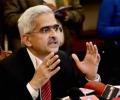
'No one cares about fiscal deficit now. Or for that matter, inflation.' 'The focus is on growth and growth alone.' 'RBI needs to break the risk aversion of banks and infuse adrenaline in their veins', says Tamal Bandyopadhyay.

Bad loans of PSU banks rose by 28.5 per cent.

'80% of the rural and urban population don't have enough purchasing power.'

Once these banks start showing losses, they will not be able to pay dividends to the government nor pay taxes, which will further aggravate the situation for the government as its return on investment as an investor would be very negligible for the next few years, says M V Subramanian.

Realtors split on possibility of price fall, gold may replace cash in secondary deals.

On February 22, 2013, the Reserve Bank of India issued guidelines on 'Licensing of New Banks in the Private Sector'.

In the Sensex pack, IndusInd Bank was the top gainer, soaring around 8 per cent, followed by Bajaj Finance, Axis Bank, PowerGrid, ONGC, ICICI Bank, Sun Pharma and M&M.

FinMin plans tougher targets for bad loans, Casa and others in performance-linked pay for senior management.

Foreign money has been pouring into India's fast-growing e-commerce sector, with investors ranging from Japan's Softbank Corp to Singapore's Temasek Holdings.

Foreign currency loans raised by Indian companies nosedived to $210 million in the September quarter (Q2), 93.3 per cent less than the year-ago period when five firms raised $3.1 billion. The Q2 amount is the lowest since December 2003 quarter when India Inc raised $191 million. Companies cited volatility in the currency markets, sharp rise in interest rates in the United States, and fund availability in India as the main reasons behind the sharp fall.
